Gottlieb Law, PLC provides this article for information purposes only and nothing herein creates an attorney-client relationship. You should not take any actions in reliance on any of the information contained herein without consulting with qualified legal counsel first and reading this article is not a proper substitute for seeking legal advice of your specific situation. Laws change over time and you should seek counsel to discuss any specific legal questions.
The Arizona Residential Landlord and Tenant Act provides both landlords and tenants with defined legal rights and remedies when a rental relationship breaks down. It sets out duties for each party, explains what happens when those duties are not met, and outlines available remedies, which may include notice requirements, repair rights, damages, termination of the rental agreement, and court enforcement depending on the violation. In other words, the Act is designed to protect both property rights and tenant habitability—not just one side of the dispute.
Arizona property management law may appear straightforward on paper—until the first real problem arises. A tenant stops paying, a maintenance issue becomes a habitability complaint, or an owner questions a charge and demands immediate documentation. In many cases, the difference between a clean resolution and a costly dispute comes down to documentation, timing, and whether your policies comply with Arizona law.
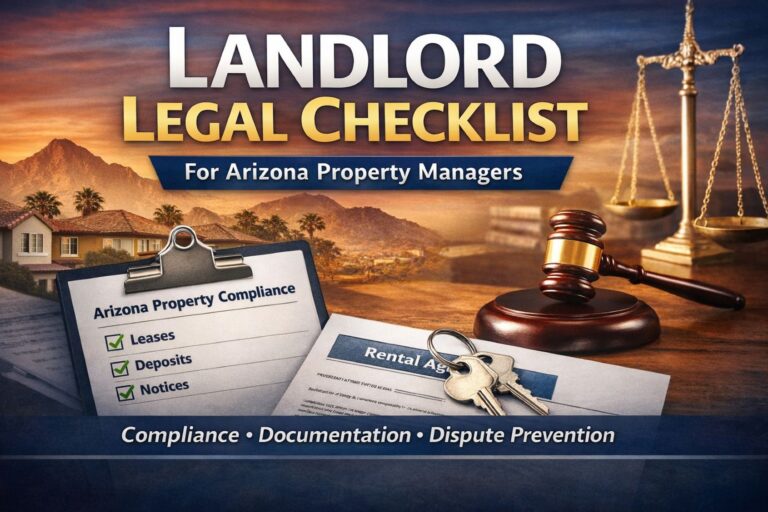
At Gottlieb Law, we regularly see property managers become involved in landlord-tenant conflicts that could have been avoided with consistent processes. The goal of this checklist is straightforward: reduce risk, protect owners, keep tenants informed, and create documentation that supports your position if a dispute escalates. This checklist is intended to function as a repeatable system you can use during onboarding, lease-up, and whenever issues arise.
Licensing And Authority To Manage In Arizona
The first item on a landlord legal checklist for Arizona property managers is licensing and authority. Property management often intersects with real estate licensing rules, designated broker oversight, and the handling of client funds. If your business model includes collecting rent, negotiating leases, or managing trust funds, you should confirm that your role complies with Arizona requirements and that your internal processes align with applicable regulatory standards.
A strong compliance framework includes clear lines of responsibility and consistent recordkeeping. Many issues arise when a team expands but internal procedures do not keep pace—particularly with security deposits, owner funds, and financial reporting. It is also important to document who has authority to approve repairs, issue notices, and communicate final decisions to tenants.
Use the following licensing and authority checklist:
- Confirm the appropriate licensing structure for your services and team roles.
- Document designated broker oversight and escalation procedures.
- Maintain written policies for trust account handling and reconciliations.
- Establish retention policies for leases, ledgers, notices, and inspection records.
Property Management Agreement Checklist
A strong property management agreement does more than establish fees. It defines the relationship, reduces ambiguity, and provides a framework when the owner relationship becomes strained. If the agreement is vague, disputes often arise over maintenance approvals, owner reserves, vendor selection, and what qualifies as an emergency.
A well-drafted agreement also provides protection during offboarding. Owners may change property managers at critical times, such as during a nonpayment situation or immediately before a lease renewal. Clear termination and recordkeeping provisions help prevent the transition from becoming a dispute over missing documents or incomplete responsibilities.
Key items to confirm in every agreement:
- Scope of authority for leasing, renewals, notices, and enforcement actions.
- Repair approval thresholds, owner reserves, and emergency authorization protocols.
- Reporting cadence, owner statements, and access to financial records and invoices.
- Vendor management expectations and documentation requirements.
- Termination provisions, file transfer timelines, and final accounting procedures.
Pre-Lease Compliance Checklist
The pre-lease stage is where fair and consistent practices are either established or overlooked. Screening criteria, advertising language, application materials, and disclosure practices should be applied consistently across the portfolio. Inconsistent screening and inadequate documentation are common drivers of landlord-tenant disputes in Arizona, even when the property manager’s intent is reasonable.
The pre-lease stage is also the most effective time to confirm that the property file is complete. If key details—such as HOA rules, parking policies, utility responsibilities, or landscaping obligations—are not clarified before move-in, you may need to address misaligned expectations after the tenancy has already begun.
Before marketing a unit, confirm the following:
- Written rental criteria and an application process applied consistently across all applicants.
- A standardized application packet with appropriate consent language and documentation requirements.
- Disclosure documents appropriate for the property type and condition.
- A clear allocation of utility and service responsibilities between tenant and owner.
- A policy addressing renter’s insurance requirements and how compliance is tracked.
Leasing Paperwork Checklist That Prevents Disputes
Leases do more than establish rent and term. They define expectations for repairs, access, conduct, and the consequences of noncompliance. A well-structured lease packet is one of the most effective risk management tools in property management, particularly for managers overseeing multiple properties with varying rules.
Lease documentation should reflect how the property is actually operated. If a lease assigns landscaping responsibilities to the tenant but the owner retains a vendor, that inconsistency may lead to billing disputes or maintenance complaints. If the property is subject to an HOA, the lease should incorporate applicable rules and clearly outline the consequences of tenant violations.
Include the following documents in your lease-up packet:
- A lease agreement tailored to the specific unit and property rules.
- Addenda addressing pets, smoking, parking, utilities, and maintenance responsibilities.
- HOA rules and a tenant acknowledgment, where applicable.
- Rent collection terms, late fees, returned payment policies, and communication protocols.
- A clearly defined renewal process, including timelines for rent adjustments and lease updates.
Move-In And Ongoing Operations Records That Matter
The move-in process is your best opportunity to establish a strong property file. When the unit condition is clearly documented and acknowledged by the tenant, security deposit disputes become significantly easier to resolve. When move-in documentation is rushed or inconsistent, the move-out process often turns into a dispute over pre-existing conditions.
Ongoing operations determine whether a file remains organized or begins to break down. Maintenance requests, communications, periodic inspections, and tenant complaints should be documented consistently. If a dispute escalates, a clear, well-documented timeline is often more persuasive than any single communication.
Build a reliable operations file with:
- Move-in inspection checklist with dated photographs and tenant acknowledgment.
- Maintenance request tracking with timestamps, status updates, and closure notes.
- Vendor invoices tied to specific work orders and properties.
- Communication logs documenting notices, complaints, and resolutions.
- Periodic inspection records, including photographs where appropriate.
Maintenance, Habitability, And Vendor Management Checklist
Maintenance disputes rarely arise from a single repair. They typically result from delays, unclear responsibility, and insufficient documentation of what was reported and how it was addressed. A property manager’s strongest protection is a consistent response process, a defined emergency protocol, and a documented repair timeline.
Vendor management is equally important. If an owner challenges a charge, you must be able to show what was approved, why it was necessary, and how the cost aligns with the work performed. While a well-drafted management agreement helps set expectations, day-to-day documentation carries the most weight.
Confirm you have:
- Written maintenance standards and response time expectations.
- An emergency protocol and after-hours decision framework.
- Vendor approval procedures aligned with the management agreement.
- Documentation of repairs, including follow-up and tenant communications.
- A system for tracking recurring issues such as HVAC failures, plumbing leaks, and drainage concerns.
Security Deposits, Accounting, And Trust Handling
Security deposit and accounting disputes often involve both financial and emotional stakes. Tenants may expect a full refund, while owners often expect prompt reimbursement for repairs. The most effective way to manage these conflicts is to ensure that condition, work performed, and costs are supported by clear documentation.
Accounting consistency is also critical to maintaining trust. Owners want to see that rent was collected properly, expenses were justified, and funds were handled appropriately. When statements are accurate and ledgers align with bank activity, disputes are often minimized.
Use this deposit and accounting checklist:
- Clear deposit collection and tracking within the tenant ledger.
- Move-out condition records with photographs and notes supporting any deductions.
- Vendor invoices tied to work orders and documented condition issues.
- Written itemizations supported by documentation rather than estimates.
- Consistent reconciliation practices and organized record retention.
Notices, Noncompliance, And Eviction Readiness
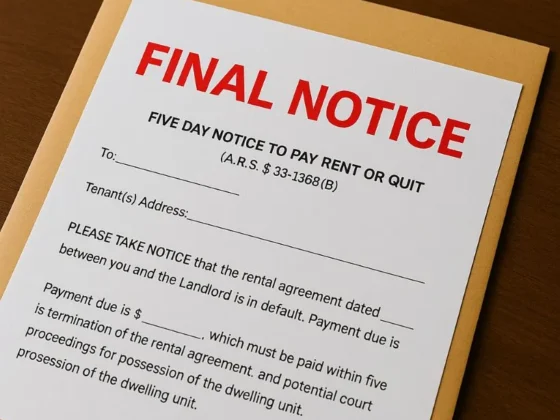
Errors in notices can quickly become costly. If a notice is inaccurate, improperly served, or unsupported by the ledger, the process can stall and the dispute can escalate. The objective is not to rush to eviction, but to maintain clean, defensible steps so you retain control over the timeline if escalation becomes necessary.
Eviction readiness begins earlier than many expect. It starts with an accurate ledger, consistent communication records, and a clear paper trail documenting what the tenant was told and when. A property manager who can produce a clean timeline typically has greater leverage in negotiations and fewer surprises in court.
Keep these tools ready:
- Notice templates reviewed for Arizona compliance and updated as laws change.
- Proof-of-service procedures and documentation requirements.
- Ledger verification protocols before issuing any payment demand.
- A compliance timeline log for each issue.
- A written escalation policy aligned with the owner’s instructions.
Consult with an Experienced Arizona Real Estate Attorney
If your processes feel inconsistent—or if you have experienced repeated disputes involving deposits, notices, or maintenance responses—a legal review can help. Gottlieb Law can review your management agreement, lease packet, notice templates, and operational procedures to help protect your business before issues escalate into litigation. Contact us online or call us to schedule an initial consultation at 602-899-8188.
Frequently Asked Questions About Landlord Legal Checklist For Arizona Property Managers
What Licensing Do Arizona Property Managers Need?
Licensing requirements depend on the services provided and the structure of your company. Many property management activities overlap with real estate brokerage regulations, and handling trust funds adds an additional layer of compliance. A key starting point is identifying who has authority to negotiate leases, collect rent, and manage owner funds. A legal review can help confirm that your current structure complies with Arizona requirements.
What Documents Should Every Property Manager Keep for Each Property?
Each property file should include the management agreement, current lease and addenda, tenant ledger, inspection records, maintenance history, and notice records. Vendor invoices should be tied to work orders and maintained in an organized and accessible format. Move-in and move-out photographs are especially important in deposit disputes. Consistent documentation is often the deciding factor in landlord-tenant conflicts.
What Should Be Included in a Property Management Agreement?
The agreement should define scope of authority, fee structure, repair approval thresholds, owner reserves, reporting expectations, and termination procedures. Clear protocols for emergencies and vendor selection reduce conflict when issues arise outside normal business hours. The agreement should also address how records and funds are handled at the end of the relationship to prevent disputes during transitions.
How Should Move-In Inspections Be Documented?
A move-in inspection should include a written checklist, dated photographs, and tenant acknowledgment. The goal is to establish a baseline condition recognized by both parties. If the process is inconsistent or incomplete, deposit disputes become more difficult to resolve. A standardized inspection process protects both the owner and the tenant.
What Records Help Most with Security Deposit Disputes?
Photographs, condition notes, invoices, and a tenant ledger aligned with the timeline are the most effective. Deductions should be supported by documented damage or cleaning beyond normal wear and tear. Estimates alone often lead to disputes. A well-documented file that clearly connects condition changes to costs is significantly easier to defend.
How Do Property Managers Reduce Maintenance-Related Claims?
Timeliness and documentation are critical. A clear intake process, an established emergency protocol, and a documented repair timeline help prevent misunderstandings. Tenant communications should be logged, and vendor invoices should correspond directly to the work performed. Recurring issues should be tracked and addressed systematically.
What Notice Mistakes Cause the Biggest Problems in Arizona?
Common issues include incorrect amounts, inaccurate dates, insufficient proof of service, and notices issued without a verified ledger. Inconsistent templates across properties can also create risk. Notices should be accurate, well-documented, and consistently applied to preserve enforcement options.
When Should a Property Manager Talk to a Lawyer?
Legal guidance is advisable when updating lease documents, revising notice templates, addressing recurring deposit disputes, or managing high-conflict tenant situations. It is also important when a company is growing and its procedures have not kept pace. Early legal input is typically more efficient and cost-effective than resolving disputes after they escalate.