Gottlieb Law, PLC provides this article for information purposes only and nothing herein creates an attorney-client relationship. You should not take any actions in reliance on any of the information contained herein without consulting with qualified legal counsel first and reading this article is not a proper substitute for seeking legal advice of your specific situation. Laws change over time and you should seek counsel to discuss any specific legal questions.
Arizona remains one of the most LLC-friendly states for real estate investors, business owners, and landlords. However, the regulatory and compliance environment for Arizona LLCs is evolving.
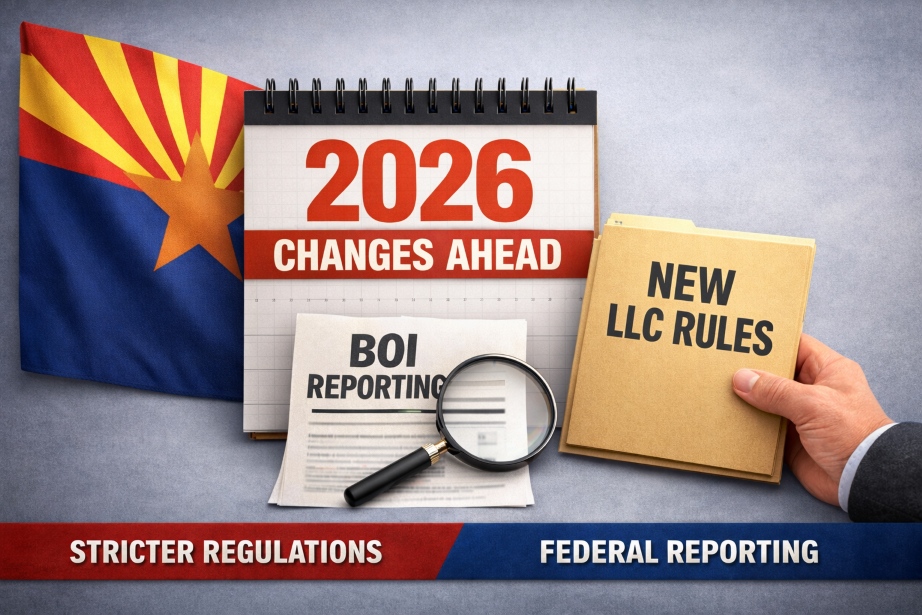
As owners plan for 2026 and beyond, two developments warrant particular attention:
- State-level filing safeguards adopted by the Arizona Corporation Commission (ACC) in 2025, designed to reduce unauthorized or fraudulent business filings; and
- The evolving federal Beneficial Ownership Information (BOI) reporting framework under the Corporate Transparency Act, including regulatory changes and ongoing legal uncertainty.
These developments do not represent a wholesale rewrite of Arizona LLC law. Instead, they affect how LLC owners approach filing authority, record accuracy, entity monitoring, and long-term compliance planning.
Gottlieb Law’s Arizona real estate attorneys assist clients with LLC formation, governance, transactional readiness, and ongoing compliance, helping property owners structure and maintain entities that are legally sound and operationally reliable in a changing regulatory environment.
What Changed Recently — and What Did Not
The Arizona Corporation Commission (ACC) adopted a series of anti-fraud safeguards beginning in 2025 in response to an increase in unauthorized and fraudulent business filings. These measures are intended to improve identity verification and record reliability within the ACC’s business filings system. They do not change the underlying statutory authority of LLC members or managers under Arizona law.
What Changed
Enhanced identity verification for certain filings
The ACC now requires identity verification for certain in-person filings, including presentation of valid identification, as part of its broader effort to deter fraudulent submissions. Additional verification measures are expected to accompany the rollout of the ACC’s updated online filing system: verify with legal counsel to confirm timing of the changes.
Optional Signing Authority Form
The ACC permits LLCs to file a Signing Authority Form identifying non-member or non-manager individuals—such as attorneys, accountants, or administrative staff—who are authorized to submit filings on the LLC’s behalf.
- This form is optional.
- It does not replace or limit the statutory authority of members or managers under Title 29.
- Its purpose is to assist the ACC in evaluating whether a filing was submitted by an authorized representative.
Attestation of Existence for dormant entities
LLCs that have had no filings for a defined period may be asked to submit an Attestation of Existence confirming that the entity remains active and that its records are accurate. Failure to respond can result in a “pending inactive” status and, ultimately, administrative dissolution if not cured. It is recommended to confirm any time periods with counsel.
Acceptance of user-prepared corporate disclosure filings
Arizona now allows corporations to submit user-prepared Annual Reports or Certificates of Disclosure that meet statutory content requirements, subject to ACC guidance. (This change primarily affects corporations rather than LLCs, but reflects the ACC’s broader modernization efforts.)
Together, these safeguards are intended to reduce unauthorized amendments—such as improper changes to managers or statutory agents—that can disrupt real estate transactions, title records, or lender approvals.
What Did Not Change
Despite these safeguards, Arizona’s LLC law itself remains largely unchanged.
- The authority of members and managers continues to be governed by Title 29 of the Arizona Revised Statutes and any applicable operating agreements.
- The ACC remains a ministerial filing office and does not adjudicate ownership disputes or internal authorization issues.
- Operating agreements remain the primary mechanism for allocating authority, approvals, and internal controls.
Key statutory provisions include:
- A.R.S. § 29-3112 — LLC naming requirements
- A.R.S. § 29-3201 — Articles of Organization content and filing rules
These statutes continue to provide the legal foundation for Arizona LLC formation and governance.
Federal BOI Reporting Update
At the federal level, the Beneficial Ownership Information (BOI) reporting requirements under the Corporate Transparency Act have been subject to regulatory changes and ongoing legal challenges.
In 2024–2025, FinCEN issued guidance and interim rules affecting the scope and enforcement of BOI reporting requirements, including exemptions for certain domestic U.S. entities. These rules remain subject to ongoing litigation and further regulatory revision, and reporting obligations may change again.
Because BOI requirements may change again, LLC owners should monitor FinCEN guidance and consult legal counsel before relying on current exemptions.
To stay informed, visit FinCEN’s BOI reporting page.
Choosing the Right LLC Structure for Arizona Real Estate
For investors, entity structure directly affects both liability protection and asset management. Many property owners prefer to form one LLC per property to create clear liability separation, while others group properties into a single entity for administrative simplicity.
Arizona law does not provide for series LLC formation, and Arizona does not automatically recognize series-level liability protections for transactions conducted in Arizona. Investors using series structures formed in other states should not assume those protections will apply here. In many cases, separate Arizona entities remain the safer approach. Gottlieb Law regularly helps clients evaluate their property portfolios and establish the most effective structure under Arizona law.
Naming and Formation Basics
Every Arizona LLC must have a name that is distinguishable from other registered entities and include “Limited Liability Company,” “L.L.C.,” or “LLC.” Restricted terms such as “bank” or “trust” may require prior approval from applicable regulatory agencies. See A.R.S. § 29-3112 for the full naming standards.
The Articles of Organization must include the LLC name, statutory agent, principal address, and management structure, as required by A.R.S. § 29-3201.
Arizona LLCs use a principal address designation, as reflected in ACC filing requirements. The ACC’s business-filings guidance clarifies current address and disclosure terminology.
Unless exempt (generally when the statutory agent’s street address is located in Maricopa or Pima County), Arizona LLCs must publish a notice of formation within a specified number of days after ACC approval, in a manner that complies with the publication requirements. Consulting with counsel to confirm the time-frames and publication requirements is recommended. Publication instructions are also available through the ACC.
The Statutory Agent and “Who Can Sign”
Your statutory agent is the official contact for state correspondence and legal notices. If statutory-agent information becomes outdated or the agent resigns without replacement, the ACC may classify the LLC as pending inactive and begin the administrative-dissolution process.
Separately, the ACC allows LLCs to file an optional Signing Authority Form, which can identify certain individuals—such as attorneys or administrative staff—who are authorized to submit filings to the ACC on the LLC’s behalf. This tool can help reduce unauthorized submissions but does not alter statutory authority under Arizona law.
The Operating Agreement: The Core of Control
An LLC’s Operating Agreement defines how the company operates internally. In real estate contexts, this document typically addresses:
- Capital contributions and funding obligations
- Management powers and limitations
- Member transfer restrictions and buyout provisions
- Indemnification and tax allocations
- Voting rights and lender-related covenants
Title 29 provides default rules if an Operating Agreement is silent, but default provisions rarely reflect an investor’s intent. Gottlieb Law drafts customized Operating Agreements that align with real estate-specific priorities and financial arrangements.
Real Estate-Specific Compliance and Deal Hygiene
For real estate entities, accurate documentation is critical. Inconsistent or outdated records can delay closings or refinancing. Key practices include:
- Ensuring the entity name on title matches the Articles of Organization
- Keeping manager and statutory-agent information current before recording deeds
- Coordinating with lenders regarding due-on-sale or consent issues when transferring properties between LLCs
- Listing the LLC as the named insured on applicable insurance policies
- Confirming lease signature blocks reflect current management authority
Arizona permits Remote Online Notarization (RON), allowing members and managers to execute documents securely and remotely—an important option for out-of-state investors. Consulting with counsel to confirm whether RON is accepted for your particular real estate transaction is recommended.
The 2026 and Beyond Compliance Calendar
At formation, Arizona LLCs should complete:
- Articles of Organization filing
- Statutory-agent designation and acceptance
- Publication notice, if required
Ongoing responsibilities include but are not limited to:
- Keeping principal-address and statutory-agent information current with the ACC
- Responding promptly to ACC notices to avoid pending-inactive status
- Completing an Attestation of Existence when requested by the ACC
Federal compliance should also remain on your radar. BOI and CTA requirements continue to evolve. Domestic U.S. companies are currently exempt under the interim federal rule, while foreign reporting companies remain subject to reporting obligations. FinCEN guidance should be monitored for updates.
Common Pitfalls in Arizona Real Estate LLCs
Many avoidable problems stem from small oversights. Common mistakes include:
- Skipping required publication or publishing before ACC approval
- Allowing statutory-agent information to lapse, leading to missed notices or dissolution risk
- Permitting third parties or internal staff to submit ACC filings without clear internal authorization controls (and, where appropriate, an ACC Signing Authority Form on file)
- Assuming a foreign series LLC provides the same liability protections in Arizona
A focused legal review can help prevent these issues and protect your investment portfolio.
Checklist: Forming an Arizona Real Estate LLC the Right Way
- Confirm name availability under A.R.S. § 29-3112
- Prepare Articles of Organization under A.R.S. § 29-3201
- Designate and secure written acceptance from a statutory agent
- File and obtain ACC approval
- Complete publication if required
- Draft a tailored Operating Agreement
- Establish banking, insurance, and recordkeeping
- Track future attestation or address updates
- Monitor FinCEN for BOI or CTA changes
When to Call Legal Counsel
Legal guidance becomes essential when structuring multi-member entities, managing investor capital, handling DST or 1031 transactions, or coordinating with lenders on title and consent matters. An experienced Arizona LLC attorney can ensure filings, agreements, and compliance procedures support your business objectives while reducing future risk.
Schedule Your LLC Review
Is your Arizona real estate LLC current and compliant with the new rules? The attorneys at Gottlieb Law can review your statutory agent, address, signer authority, publication proof, and ACC filings. Our firm can make sure your business is compliant with state and federal laws so you can focus on making 2026 and beyond your best year yet.
Protect your entity before your next property deal. Call us at 602-899-8188 or use our Contact Us page to schedule an initial consultation with our firm.