

Arizona real estate litigation attorney

When Arizona Real Estate Closing Falls Through - Legal Options for Buyers and Sellers - Gottlieb Law

When an Arizona Real Estate Closing Falls Through: What Are the Legal Options For Buyers And Sellers?

When an Arizona Real Estate Closing Falls Through: What Are the Legal Options For Buyers And Sellers? 1536 1024 Gottlieb Law

Gottlieb Law, PLC provides this article for information purposes only and nothing herein creates an attorney-client relationship. You should not take any actions in reliance on any of the information contained herein without consulting with qualified legal counsel first and reading this article is not a proper substitute for seeking legal advice of your specific situation.  Laws change over time and you should seek counsel to discuss any specific legal questions.



A real estate deal can feel solid for weeks, then fall apart right before the finish line. The inspection was done. The loan was moving. The moving boxes were packed. Then financing collapses, a title issue appears, a repair dispute escalates, or one side simply refuses to close.

When an Arizona real estate closing falls through, the next move should be based on the contract, not panic. Buyers and sellers both have rights, but those rights depend on the purchase agreement, addenda, contingency deadlines, notices, escrow instructions, and the reason the transaction failed. A deal falling apart doesn’t automatically mean someone breached. It also doesn’t automatically mean everyone can walk away cleanly.

This article is general information, not legal advice. If your closing has failed or appears likely to fail, getting the contract reviewed quickly can help protect your earnest money, preserve your claims, and avoid mistakes that could worsen the dispute.

Why Arizona Real Estate Closings Fall Through

Closings fall apart for many reasons, and not every failed deal is a legal dispute. Some issues are built into the normal risk of a real estate contract. Others stem from missed deadlines, poor communication, or one party refusing to perform after their cancellation rights have expired.

Financing problems are one of the most common causes. A buyer may receive early loan approval, only to lose final underwriting due to income changes, credit issues, appraisal problems, or unmet lender conditions. Inspection disputes can also sink a deal if the buyer asks for repairs or credits and the seller refuses.

Title issues can be even more disruptive. Old liens, ownership disputes, probate issues, boundary disputes, or unreleased deeds of trust can delay or block the closing. Appraisal gaps can also create problems if the property appraises below the purchase price and the buyer can’t or won’t bring extra cash.

Common deal-breakers include:

  • Financing denial or final loan conditions that cannot be satisfied.
  • Inspection disputes over repairs, credits, or property conditions.
  • Appraisal gaps that affect the buyer’s ability to close.
  • Title defects, liens, ownership disputes, or boundary problems.
  • Missed contractual deadlines that change cancellation rights.

Start With The Purchase Contract And Escrow Documents

The purchase contract controls the first layer of analysis. Before anyone threatens legal action, relists the property, refuses to sign, or demands earnest money, the contract needs to be reviewed carefully. The key question is not only “Who caused the problem?” The sharper question is “What does the contract allow under these facts?”

Buyers and sellers should review the purchase agreement, addenda, contingency deadlines, inspection provisions, financing terms, appraisal language, title provisions, cure procedures, seller disclosure obligations, and escrow instructions. In many Arizona transactions, rights change quickly once deadlines pass.

Written notices are important. A buyer with a valid right to cancel may lose leverage if they miss the notice deadline or fail to follow the contract’s procedure. A seller who believes the buyer defaulted may still need to send a required notice before pursuing certain remedies.

If the closing has already failed, gather the full file before making your next move. That includes the contract, addenda, inspection reports, lender communications, title notices, escrow emails, repair requests, cancellation forms, and any text messages or emails between the parties.

Buyer Legal Options When A Closing Falls Through

A buyer’s options depend on why the closing failed and whether the buyer still had a valid contractual basis to cancel. If an inspection, financing, appraisal, or title contingency applies, the buyer may be able to cancel and seek the return of earnest money. The key is whether the cancellation was timely and consistent with the contract.

If the seller caused the failure, the buyer may have stronger options. A seller might refuse to close, fail to deliver clear title, ignore agreed repairs, or attempt to cancel after receiving a better offer. In that situation, the buyer may be able to demand performance, negotiate a resolution, pursue damages, or in some cases seek specific performance.

Specific performance is a legal remedy where a buyer asks the court to require the seller to complete the sale. It is not automatic; it depends on the contract and the facts. Still, it can be an important option when the buyer wants the property itself, not just money.

Buyer options may include:

  • Cancel under a valid inspection, financing, appraisal, or title contingency.
  • Request return of earnest money if the contract supports cancellation.
  • Negotiate an extension, seller credit, repair agreement, or price adjustment.
  • Demand performance if the seller refuses to close without a valid reason.
  • Evaluate damages or specific performance if the seller’s breach causes loss.

Seller Legal Options When A Closing Falls Through

Sellers also have options, especially when a buyer fails to perform after contingencies have expired. A buyer may refuse to close, fail to deliver loan approval, miss deposit deadlines, ignore closing obligations, or try to cancel without a valid contractual basis. In those situations, the seller needs to move carefully and follow the contract.

The first step is determining whether the buyer still has an active contingency. If the buyer validly canceled under the contract, the seller may have limited ability to claim breach. If the buyer’s cancellation rights expired and the buyer simply failed to close, the seller may have a claim.

Earnest money is often the immediate issue. Depending on the contract, the seller may claim earnest money as liquidated damages. Some disputes may also involve additional damages if the failed closing caused measurable loss, such as carrying costs, price reductions on resale, or lost opportunities.

Sellers should avoid impulsive relisting or declaring a default before confirming their rights. If the contract requires a cure notice, the seller should follow the notice procedure. Skipping required steps can weaken an otherwise strong position.

Seller options may include:

  • Review whether the buyer still had a valid contingency or cancellation right.
  • Send required notices or cure demands if the contract requires them.
  • Claim earnest money if the buyer defaulted and the contract supports it.
  • Negotiate a release so the property can be safely relisted.
  • Consider damages if the failed closing caused financial harm.

Earnest Money Disputes After A Failed Closing

Earnest money often becomes the first major fight after a closing falls through. Buyers usually argue that they properly canceled under a contingency. Sellers often argue the buyer defaulted after deadlines expired. Escrow is caught in the middle and may not release funds without mutual instructions, a settlement, or a dispute resolution process.

The contract language matters. So do dates, notices, and written communications. A buyer who sends a timely cancellation under a valid contingency is in a very different position from a buyer who simply gets cold feet after contingencies expire. A seller who follows the notice requirements is in a stronger position than one who relies on angry emails and assumptions.

If earnest money is disputed, both sides should preserve the record. Save emails, notices, lender letters, inspection reports, repair requests, title objections, escrow messages, and cancellation forms. These documents often decide who has leverage.

Specific Performance, Damages, And Settlement

When a closing fails and the parties can’t agree, the dispute usually moves toward one of three paths: specific performance, damages, or settlement.

Specific performance may be available when one party asks the court to compel the other party to close the transaction. Buyers tend to consider this remedy when sellers refuse to complete the sale. Sellers may also have remedies, but forcing a buyer to complete a purchase can involve different practical and legal issues.

Damages focus on money. If one party breached and the other suffered measurable loss, damages may be part of the claim. Those losses may include carrying costs, price differences, lost opportunities, or other contract-based damages, depending on the facts and remedies allowed.

Settlement is often the most practical route. The parties may agree to release earnest money, extend closing, reduce price, credit repairs, cure title issues, or walk away with mutual releases. A well-drafted settlement can end the fight and prevent future claims.

Mistakes Buyers And Sellers Should Avoid

A failed closing is frustrating, but emotional decisions can quickly damage your position. The worst mistakes usually happen in the first few days, when people are angry and trying to force an outcome without reading the contract.

Avoid making the dispute worse with sloppy communications or rushed decisions. Don’t assume a verbal cancellation is enough. Don’t relist until you’ve confirmed the first contract has been properly canceled. Don’t refuse to sign escrow documents without understanding the consequences. Don’t let text messages become evidence that undercuts your legal position.

Key mistakes to avoid include:

  • Ignoring contract notice requirements or cure periods.
  • Waiving contingencies without understanding the risk.
  • Assuming escrow will automatically release earnest money.
  • Relisting or refusing access before contract rights are clear.
  • Sending emotional messages that create bad evidence.

How Gottlieb Law Helps With Failed Real Estate Closings

Gottlieb Law helps buyers and sellers assess failed closings from the contract outward. That means reviewing the purchase agreement, addenda, contingency history, escrow file, title issues, lender communications, inspection records, notices, and closing documents to identify rights and leverage.

Depending on the facts, that may involve pursuing earnest money, defending against an improper claim, negotiating a release, enforcing contract rights, seeking specific performance, or litigating breach-of-contract issues. The right strategy should protect the client’s position while keeping cost, timing, and transaction realities in view.

Get Legal Clarity Before The Dispute Gets More Expensive

If your Arizona real estate closing has fallen through, or if the deal is headed that way, Gottlieb Law can help you understand your options before you make a costly move. Contact Gottlieb Law to schedule a consultation and receive a contract-based strategy to protect your earnest money, enforce your rights, or resolve the dispute.

Contact Gottlieb Law to schedule a consultation and get clear guidance before the dispute gets more expensive. Call our firm today at 602-899-8188 to schedule a consultation or visit our contact us page.

Frequently Asked Questions About Arizona Real Estate Closings That Fall Through

Can A Buyer Back Out Before Closing In Arizona?
Yes, if the contract allows it or a valid contingency applies. If contingencies have expired, the buyer may risk losing earnest money or facing a breach claim. Timing and written notice are critical.

Can A Seller Back Out Of A Real Estate Contract In Arizona?
Sometimes, but sellers should be careful. If the seller has no valid right to cancel under the contract, the buyer may seek damages or specific performance. The contract should be reviewed before the seller refuses to close.

Who Gets Earnest Money If Closing Falls Through?
It depends on the contract, deadlines, notices, and reason the deal failed. Escrow may require mutual instructions or a dispute process before releasing funds. Written records usually drive the outcome.

Can a Buyer Force a Seller to Close?
In some cases, yes. A buyer may seek specific performance if the seller wrongfully refuses to close. The buyer’s own performance and the contract terms matter.

What Should I Do First If My Closing Falls Through?
Gather the purchase contract, addenda, escrow file, notices, lender communications, inspection reports, and title documents. Get legal review before sending demands, canceling, relisting, or giving up earnest money.


Gottlieb Law, PLC provides this article for information purposes only and nothing herein creates an attorney-client relationship. You should not take any actions in reliance on any of the information contained herein without consulting with qualified legal counsel first and reading this article is not a proper substitute for seeking legal advice of your specific situation.  Laws change over time and you should seek counsel to discuss any specific legal questions.



Learn how quiet title actions in Arizona help resolve ownership disputes, remove clouds on title, clear old liens, correct deed errors, and resolve competing real estate claims.

Quiet Title Actions in Arizona: How to Clear Disputed Ownership

Quiet Title Actions in Arizona: How to Clear Disputed Ownership 773 518 Gottlieb Law

Gottlieb Law, PLC provides this article for information purposes only and nothing herein creates an attorney-client relationship. You should not take any actions in reliance on any of the information contained herein without consulting with qualified legal counsel first and reading this article is not a proper substitute for seeking legal advice of your specific situation.  Laws change over time and you should seek counsel to discuss any specific legal questions.


A title problem can stay hidden for years, then suddenly block a sale, refinance, estate transfer, or investment deal. One old lien, a missing release, a deed error, a boundary conflict, or an unknown claimant can create enough uncertainty for a title company to pause and a buyer to hesitate. Real estate depends on clear ownership, and when the public record doesn’t tell a clean story, the whole transaction can stall.

A quiet title action is a legal tool used to resolve disputed ownership and clear clouds on title. In Arizona, it allows someone with an interest in real property to ask the court to determine who owns the property, which claims are valid, and which claims should no longer affect title.

This article is general information, not legal advice. If a title problem is affecting a sale, refinance, or ownership dispute, a focused legal review can help identify the fastest path forward.

What Is A Quiet Title Action In Arizona?

A quiet title action is a lawsuit seeking to confirm rights in real property. The word “quiet” means the case is designed to quiet challenges, clouds, or competing claims that interfere with clean ownership. If another person or entity appears to have a claim in the record, the court can review the evidence and issue a judgment that clarifies title.

A quiet title action does not create ownership from thin air. It asks the court to examine deeds, liens, releases, probate records, surveys, title reports, and other documents to decide which claims should remain and which should be cleared.

Arizona quiet title law is rooted in statutes and court procedure. Arizona Revised Statutes (A.R.S.) § 12-1101 is one key starting point because it allows a person to bring an action to determine adverse claims to real property.

Common Reasons Property Owners File Quiet Title Actions

Quiet title cases often begin after a title report reveals a problem. The issue may be old, technical, or tied to someone who hasn’t been involved with the property in years. If it still clouds the record, it can block a clean transaction.

Common reasons include:

  • Old liens, judgments, or deeds of trust that still appear in the public record.
  • Missing releases, reconveyances, or payoff documentation.
  • Deed errors, incorrect legal descriptions, or conflicting ownership records.
  • Probate, heirship, or trust issues involving unclear transfers.
  • Tax sale or foreclosure questions that leave prior interests unresolved.
  • Boundary disputes, easement conflicts, or adverse possession claims.

Even a weak or outdated claim can create real problems if it remains recorded. Buyers may not want the risk. Lenders may not fund. Title insurers may add exceptions or refuse coverage until the issue is resolved.

Who Must Be Named In A Quiet Title Lawsuit?

A quiet title case must identify the right parties. Anyone who has or may claim an interest in the property may need to be named and served. Missing a necessary party can leave the title problem unresolved, even after a judgment.

Known parties may include prior owners, lienholders, lenders, trustees, heirs, neighbors, beneficiaries, or people listed in recorded documents. If a deed of trust still appears in the record, the lender or successor may need to be addressed. If a probate issue created the title problem, the heirs or estate representatives may need to be notified.

Unknown claimants can also complicate the case. Sometimes the record points to parties who can’t be found, entities that no longer exist, or possible heirs who aren’t clearly identified. Those situations require proper legal procedure, so the final judgment can do its job.

How The Quiet Title Process Usually Works

A quiet title case usually starts with an investigation. That means reviewing the title report, deed history, recorded documents, surveys, probate records, foreclosure history, tax sale records, and communications with anyone claiming an interest.

The next step is deciding whether court action is needed. Some title issues can be resolved through a release, a corrective deed, an affidavit, a settlement agreement, or a title company-approved document. If the needed party won’t cooperate, can’t be located, or disputes the claim, litigation may be necessary.

The general process often includes:

  • Reviewing deeds, title reports, liens, releases, surveys, and ownership records.
  • Identifying all known and possible claimants.
  • Filing a quiet title complaint in the proper Arizona superior court.
  • Serving all necessary parties through proper legal procedure.
  • Resolving defaults, settlements, motions, hearings, or contested issues.
  • Recording the final judgment so the title record reflects the court’s ruling.

The final recording step is critical. The goal is not only winning the case. The goal is creating a public record that buyers, lenders, and title companies can rely on.

Quiet Title Actions And Lis Pendens

A lis pendens may be recorded in connection with a quiet title case to notify the public that litigation may affect title to the property. This can be useful if ownership is actively disputed and there is a risk that someone may try to sell, refinance, or transfer an interest while the lawsuit is pending.

A lis pendens is not a final ruling. It is a notice tied to litigation. In a quiet title case, the court may be asked to resolve ownership or property rights, alerting buyers, lenders, title companies, and other interested parties.

Recorded notices should be handled carefully. An improper, outdated, or unsupported filing can create separate problems.

Evidence That Can Strengthen A Quiet Title Case

Quiet title cases are document-driven. The more organized the evidence, the easier it is to explain the title problem and the requested solution. Memories can help, but recorded documents and objective proof usually carry more weight.

Useful evidence can include:

  • Current deeds and prior deeds in the chain of title.
  • Title reports, title commitments, and title insurance policies.
  • Recorded liens, releases, deeds of trust, and reconveyance documents.
  • Surveys, plats, legal descriptions, and boundary records.
  • Probate documents, trust records, death certificates, and heirship information.
  • Closing statements, purchase contracts, payoff letters, and lender records.
  • Communications with prior owners, lenders, title companies, neighbors, or claimants.

Strong documentation can also help resolve the issue without a drawn-out fight. If the records support your position, the other side may be more willing to sign a release, cooperate with a corrective deed, or settle.

Quiet Title After Tax Sales, Foreclosures, And Probate Issues

Tax sales, foreclosures, and probate transfers often create quiet title problems because they involve technical procedures and multiple possible claimants. If a step in the title record is disputed or unclear, the title record may remain clouded even after someone believes they have acquired the property.

After a tax sale, there may be questions about notice, redemption rights, prior interests, or insurable title. After a foreclosure, there may be questions about prior liens, junior interests, trustee sale issues, or whether all procedures were followed.

Probate and inheritance issues can also create disputed ownership. A deceased owner’s interest may not have been transferred properly. Heirs may be missing or unknown. Family members may disagree about who inherited what. A quiet title action can bring those claims into court and create a judgment that clarifies ownership.

What Property Owners Should Do Before Filing

Not every title issue requires a lawsuit. Some problems can be fixed through simpler documents, while others require court action because the claimant is unknown, unavailable, or unwilling to cooperate.

Before filing, property owners should:

  • Order or review a current title report.
  • Identify every recorded issue that clouds title to the property.
  • Gather deeds, liens, releases, surveys, and closing records.
  • Avoid signing corrective documents without understanding their legal effect.
  • Speak with counsel before a sale, refinance, or deadline is at risk.

A careful review can save time and money. Filing too quickly can be wasteful, but waiting too long can damage a transaction or weaken leverage.

Get Clear Title Before The Problem Gets More Expensive

If you’re dealing with disputed ownership, an old lien, a deed problem, a boundary conflict, an heirship issue, or a stalled sale tied to unclear title, Gottlieb Law can help you evaluate the right path forward. A focused review of the title history and competing claims can show whether the issue can be resolved through documentation, negotiation, or a quiet title action. 

Contact Gottlieb Law to schedule a consultation and get clear guidance before the dispute gets more expensive. Call our firm today at 602-899-8188 to schedule a consultation or visit our contact us page.

Frequently Asked Questions About Quiet Title Actions In Arizona

What Is A Quiet Title Action In Arizona?
A quiet title action is a lawsuit seeking to confirm ownership and resolve competing property claims. The goal is a judgment that clarifies title.

When Do You Need A Quiet Title Action?
You may need one when the public record shows unclear or competing ownership interests. Common examples include old liens, deed errors, boundary disputes, probate issues, or tax sale problems.

Can A Quiet Title Action Remove An Old Lien?
It may help if the lien is invalid, expired, satisfied, unreleased, or improper. Some lien problems can be fixed without litigation, while others require a judgment.

How Long Does A Quiet Title Action Take In Arizona?
Timing depends on whether the case is contested and how many parties must be served. Uncontested cases usually move faster than disputes involving competing claims.

Who Has To Be Served In A Quiet Title Case?
Anyone who has or may claim an interest in the property may need to be named, depending on the nature of the claim and applicable procedure.  That can include prior owners, lienholders, heirs, lenders, neighbors, or unknown claimants.

Does A Quiet Title Action Transfer Ownership?
Not exactly. It usually clarifies and confirms ownership rather than creating a new transfer from scratch. Once recorded, the judgment helps clean up the title record.

Can Quiet Title Help After A Tax Sale Or Foreclosure?
Yes, quiet title actions are often used when tax sales or foreclosures leave prior claims, notice issues, or old interests unresolved. These cases should be reviewed carefully.

Can A Quiet Title Case Settle Without A Trial?
Yes, many cases resolve through settlement, releases, corrective deeds, or default judgment. Any resolution should be properly recorded so the title record is clear.


Gottlieb Law, PLC provides this article for information purposes only and nothing herein creates an attorney-client relationship. You should not take any actions in reliance on any of the information contained herein without consulting with qualified legal counsel first and reading this article is not a proper substitute for seeking legal advice of your specific situation.  Laws change over time and you should seek counsel to discuss any specific legal questions.
Learn how partition actions in Arizona work when co-owners disagree about selling real estate, buyouts, inherited property, or dividing proceeds.

Partition Actions in Arizona: When Co-Owners Can’t Agree on Selling

Partition Actions in Arizona: When Co-Owners Can’t Agree on Selling 853 560 Gottlieb Law

Gottlieb Law, PLC provides this article for information purposes only and nothing herein creates an attorney-client relationship. You should not take any actions in reliance on any of the information contained herein without consulting with qualified legal counsel first and reading this article is not a proper substitute for seeking legal advice of your specific situation.  Laws change over time and you should seek counsel to discuss any specific legal questions.


Co-owning real estate can make sense at the start. Siblings inherit a family home. Business partners buy an investment property. Friends purchase land together. An unmarried couple buys a house, then life changes. The problem starts when one owner wants to sell, refinance, rent, or move on, and the other owner refuses.

That’s where a partition action can become the legal path forward. In Arizona, a partition action allows a co-owner or claimant with an interest in real property to ask the court to divide the property or order a sale when the owners can’t agree. Arizona law provides a statutory process for compelling partition through a complaint filed in superior court in the county where the property is located.

At Gottlieb Law, we understand that these disputes are rarely just about property. They’re often tied to family history, business fallout, inheritance stress, breakup conflict, money pressure, or years of unpaid expenses. The right strategy depends on the ownership structure, the property type, the financial contributions, and whether a practical settlement is still possible.

This article is general information, not legal advice. If you’re dealing with a co-owner who won’t sell, won’t cooperate, or won’t contribute fairly, getting legal guidance early can help protect your equity and reduce avoidable conflict.

What Is A Partition Action In Arizona?

A partition action is a lawsuit used to resolve disputes between co-owners of real property. It gives the court a way to end deadlock when one or more owners want out and the others won’t agree on a voluntary solution. The court may divide the property physically if that makes sense, or it may order the property sold and divide the proceeds among the owners.

The Arizona partition statute (A.R.S. § 12-1211) states that an owner or claimant of real property, or an interest in real property, may compel partition by filing a complaint in superior court. The complaint must identify the known owners or claimants, describe the ownership interests as far as known, and include a description and estimated value of the property.

In plain English, this means one co-owner doesn’t usually have to stay trapped in joint ownership forever. If the owners can’t agree privately, the court can step in and create a path toward division, sale, or another legally recognized outcome.

Partition cases often involve:

  • Siblings who inherited property and disagree about selling.
  • Former romantic partners who bought a home together.
  • Business partners who no longer want to hold property jointly.
  • Friends or relatives who bought investment property together.
  • Co-owners who disagree about rent, repairs, access, expenses, or buyout terms.

Why Co-Owners End Up In Partition Disputes

Most partition disputes don’t begin with a lawsuit. They usually begin with a breakdown in expectations. One owner thought the property would be sold after a parent passed away. Another owner wants to keep it for sentimental reasons. One person has been paying the mortgage, taxes, insurance, or repairs. Another person believes ownership percentages alone should control the final payout.

These disputes can become especially tense when one co-owner occupies the property while the others pay expenses or receive no rental income. A non-occupying owner may feel financially locked out. The occupying owner may feel they’ve carried the property for years and deserve credit for that effort. Those competing narratives can make informal resolution difficult.

Arizona partition discussions also often include questions about whether one owner’s payments or improvements should affect the final distribution. Depending on the facts and applicable law, courts may consider issues such as mortgage payments, taxes, improvements, or other financial contributions when determining the parties’ respective rights.

The longer co-owners wait to address these issues, the messier the evidence can get. Receipts disappear. Agreements were never written down. Family conversations get remembered differently. A partition action can bring structure to the dispute, but early documentation often makes a major difference.

Partition In Kind Versus Partition By Sale

There are two broad outcomes people usually talk about in partition cases: partition in kind and partition by sale. Partition in kind means the property is physically divided among the co-owners. This may work for vacant land, agricultural property, or large parcels that can be fairly divided without destroying value.

Many residential properties can’t be divided that way. You can’t realistically split a single-family home down the middle and give each owner a usable share. In those situations, a court may order a sale and divide the proceeds according to the parties’ ownership interests and any adjustments the court finds appropriate.

Arizona law recognizes that if a fair and equitable physical division can’t be made, or if a sale would be more beneficial to the parties, the court may order the property sold. This is one reason many partition disputes involving homes, condos, and small commercial properties end with a sale rather than a physical division.

A sale may be frustrating to an owner who wants to keep the property, but the court’s role is not to allow one co-owner to indefinitely block another from accessing their equity. The court looks for a legally fair path out of the ownership deadlock.

What The Court Looks At In A Partition Case

The court starts with ownership. Who is on title? What interest does each person claim? Are the parties joint tenants, tenants in common, heirs, business partners, or something else? The deed and title records are usually central, but the court may also need to look at contracts, estate documents, partnership agreements, or other records.

Next comes property value. The complaint must include an estimated value, and the case may later require appraisals or market evidence. If the property is sold, the sale process and net proceeds become major points of focus.

Financial contribution is often another key issue. One co-owner may claim credits for mortgage payments, taxes, insurance, repairs, improvements, or property preservation costs. Another may argue for offsets based on exclusive occupancy, rental value, property damage, or unpaid obligations. These accounting issues can be just as important as the sale itself.

Important evidence may include:

  • Deeds, title reports, and ownership records.
  • Mortgage statements, tax bills, and insurance records.
  • Receipts for repairs, maintenance, and improvements.
  • Rental records, lease agreements, or occupancy history.
  • Written agreements between co-owners.
  • Appraisals, listing records, and market valuation materials.

The cleaner the records, the easier it is to tell a persuasive story. Partition cases can become expensive when the parties agree that the property should be sold but fight over every dollar after sale.

Can One Co-Owner Stop A Partition Action?

A co-owner can respond, contest details, and raise legal or factual arguments,but simply refusing to sell does not necessarily prevent a partition action from moving forward.  Arizona’s partition framework exists because co-owners sometimes reach an impasse that private negotiation can’t solve. A common scenario could be that one owner wants to sell and divide the proceeds, while the other does not.

That said, the details still matter. A co-owner may dispute ownership percentages, claimed credits, sale procedures, valuation, or whether a buyout should happen instead of a forced sale. In some family property situations, special rules may also affect the process. Every case needs a close look at title, ownership history, and any agreements between the parties.

It’s also worth noting that many partition cases settle before a final court-ordered sale. A co-owner may buy out the other side. The owners may agree to list the property voluntarily. They may agree on a broker, sale price, repairs, or distribution formula. Litigation often pushes parties toward practical decisions they avoided before the lawsuit was filed.

Buyouts, Settlements, And Alternatives To A Forced Sale

A partition lawsuit doesn’t always mean the property must be sold on the open market. Sometimes one owner wants to keep the property and has the financial ability to buy out the other owner’s share. If the parties can agree on value, credits, and closing terms, a buyout can be cleaner than a court-supervised sale.

Settlement may also involve refinancing, deed transfers, repayment agreements, or a structured listing plan. For example, co-owners may agree that the occupying owner can keep the property if they refinance within a set period and pay the other owner a specified amount. If that doesn’t happen, the property is listed for sale.

The challenge is making sure the agreement is clear and enforceable. Vague promises often create the next dispute. Any settlement should address valuation, deadlines, title transfer, liens, expenses, tax considerations, possession, repairs, and what happens if someone fails to perform.

Practical settlement options may include:

  • One owner buying out the other owner’s interest.
  • A voluntary listing agreement with agreed sale terms.
  • A refinance that removes one owner from the loan and title.
  • A written settlement that allocates credits and reimbursements.
  • A court-approved sale process if private agreement fails.

What If One Co-Owner Paid More Than The Other?

This is one of the biggest flashpoints in partition cases. Co-ownership on paper may say 50/50, but the financial history may look very different. One person may have paid the down payment, mortgage, taxes, insurance, utilities, repairs, or major improvements. The other may have contributed little or nothing.

Courts can consider these issues, but the outcome depends on proof and legal framing. Payment records matter. So do communications, written agreements, and the reason the payments were made. Was the paying owner preserving the property for everyone? Were they living there rent-free? Did the other owner agree to a different contribution structure? Did improvements increase property value, or were they personal upgrades with limited market benefit?

These cases are rarely as simple as “I paid more, so I get more.” The court may need to consider credits and offsets from both directions. An owner who paid the mortgage may seek reimbursement, while a non-occupying owner may seek an offset for the other owner’s exclusive use of the property.

This is where legal strategy and documentation become central. A strong accounting presentation can change the economics of the case.

What Buyers, Heirs, And Investors Should Know Before Co-Owning Property

The best partition lawsuit is the one you never need to file. Co-ownership can work, but only if the parties have clear written expectations in place before conflict arises. Too many people buy property together or inherit property without discussing what happens if one person wants out.

A written co-ownership agreement can address sale rights, buyout formulas, expense sharing, repairs, occupancy, rentals, refinancing, death, incapacity, and dispute resolution. It can also reduce the risk of a future court fight by giving everyone a roadmap before emotions run high.

People should be especially careful with:

  • Family property inherited by multiple siblings.
  • Investment property bought with friends or business partners.
  • Homes purchased by unmarried couples.
  • Property held with unequal contributions.
  • Real estate where one owner lives there and others do not.

Nobody wants to plan for conflict at the beginning of a deal, but co-ownership without an exit plan can become expensive. A clear agreement can preserve relationships and protect equity.

How Gottlieb Law Can Help With Partition Disputes

Partition cases require more than filing paperwork. They require a strategy that accounts for ownership rights, sales pressure, accounting disputes, leverage, and the property’s practical value. Sometimes the right move requires prompt court action. Other times, the best result comes from building a strong case and using that leverage to reach a faster settlement.

Gottlieb Law helps property owners evaluate their position, organize evidence, assess likely outcomes, and pursue a path that fits the client’s goals. That may mean filing a partition complaint, defending against one, negotiating a buyout, resolving accounting disputes, or creating a settlement structure that prevents future problems.

If your co-owner refuses to sell, won’t contribute, occupies the property without agreement, or is blocking a reasonable resolution, waiting usually doesn’t make the dispute easier. Clear legal action can shift the conversation from frustration to options.

Talk to an Experienced Arizona Real Estate Attorney

If you’re stuck in a co-ownership dispute and can’t get agreement on selling, buying out, refinancing, or dividing proceeds, Gottlieb Law can help you understand your rights and build a plan. A focused review of the deed, financial records, property history, and co-owner communications can reveal the strongest path forward. 

Contact Gottlieb Law to schedule a consultation and get clear guidance before the dispute gets more expensive. Call our firm today at 602-899-8188 to schedule a consultation or visit our contact us page.

Frequently Asked Questions About Partition Actions In Arizona

What Is A Partition Action In Arizona?
A partition action is a lawsuit filed when co-owners can’t agree on how to use or dispose of jointly owned property. The court can divide the property or order a sale. Most single-family home disputes focus on the sale and distribution of proceeds.

Can One Co-Owner Force The Sale Of A Property?
In many situations, yes. Arizona law allows an owner or claimant of real property to seek partition through superior court. The other owner can contest details, but refusal alone may not stop the case.

Can A Partition Action Be Avoided?
Yes, if the owners can reach a voluntary agreement. Common alternatives include a buyout, a refinance, a written settlement, or an agreed listing plan. The agreement should be detailed enough to prevent future disputes.

What Happens If One Owner Paid More Expenses?
The court may consider financial contributions, but proof matters. Mortgage payments, taxes, insurance, repairs, improvements, and occupancy issues may all affect the accounting. Records are critical in these disputes.

Can One Owner Buy Out The Other In A Partition Case?
Yes, a buyout can be a practical solution if the parties agree on value and terms. The agreement should address deadlines, title transfer, financing, credits, and what happens if the buyout doesn’t close.

How Long Does A Partition Action Take?
Timing depends on the court, the property, and how much the parties fight over value and accounting. Some cases settle quickly after filing. Others take longer if the parties dispute ownership shares, credits, or sale procedures.

Does A Partition Action Apply To Inherited Property?
Yes, inherited property is a common source of partition disputes. Siblings or heirs may disagree about selling, living in the property, repairs, or how proceeds should be divided. Special rules may apply in some inherited property situations.

Do I Need A Lawyer For A Partition Action?
Partition cases involve title, court procedure, valuation, and financial accounting. Legal guidance can help protect your ownership interest and avoid costly mistakes. It’s especially important if the other co-owner is already represented or the property has significant value.


Gottlieb Law, PLC provides this article for information purposes only and nothing herein creates an attorney-client relationship. You should not take any actions in reliance on any of the information contained herein without consulting with qualified legal counsel first and reading this article is not a proper substitute for seeking legal advice of your specific situation.  Laws change over time and you should seek counsel to discuss any specific legal questions.

Disputes Among Real Estate Partners or Investors - Gottlieb Law

Disputes Between Real Estate Partners or Investors

Disputes Between Real Estate Partners or Investors 1491 1055 Gottlieb Law

Gottlieb Law, PLC provides this article for information purposes only and nothing herein creates an attorney-client relationship. You should not take any actions in reliance on any of the information contained herein without consulting with qualified legal counsel first and reading this article is not a proper substitute for seeking legal advice of your specific situation.  Laws change over time and you should seek counsel to discuss any specific legal questions.


Real estate partnerships usually begin with confidence. The numbers look strong. The property has potential. Everyone agrees on the upside. Then the real work begins, and suddenly the deal isn’t just about the building or land anymore. It’s about control, money, risk, trust, timing, and who gets to make the final call.

Disputes between real estate partners or investors can get heated fast because the stakes are rarely small. A disagreement over repairs, refinancing, rental income, property management, or a sale can quickly put the entire investment at risk. For owners, co-investors, developers, and business partners, the smartest move is to understand where these disputes come from and how to protect your position before the conflict becomes more expensive and potentially litigious.

Why Real Estate Partner Disputes Happen

Many real estate disputes start with unclear expectations. One partner may believe the property should be held long term, while another wants to sell as soon as the market improves. One investor may expect regular distributions, while another believes profits should be reinvested in renovations, upgrades, or debt reduction.

Trouble also starts when the written agreement is vague or incomplete. If the operating agreement or partnership agreement doesn’t clearly explain voting rights, management authority, capital contributions, buyout options, and dispute resolution procedures, partners are left arguing over assumptions.

That’s where business relationships often begin to crack. A handshake deal may feel simple at first, but it can become a serious liability once the property needs money, tenants complain, repairs pile up, or one investor wants out.

Common Disputes Between Real Estate Partners and Investors

Real estate partner disputes can take many forms. Some involve simple communication breakdowns. Others involve serious claims of misconduct, fraud, or breach of fiduciary duty.

Common conflicts include disagreements over property management, missed capital contributions, unpaid expenses, profit distributions, leasing decisions, refinancing, buyouts, sale timing, accounting records, and unauthorized decisions. In commercial real estate, partners may also dispute tenant improvements, vendor contracts, vacancy strategy, rent collection, zoning issues, or development timelines.

The core problem is usually control. Who has authority? Who gets paid? Who decides whether the property is sold, refinanced, repaired, leased, or improved? If those answers aren’t clear, the dispute can stall the investment and damage the property’s value.

Money, Contributions, and Accounting Problems

Money disputes are some of the most common and most damaging conflicts between real estate partners. One partner may stop contributing to expenses. Another may claim they paid more than their fair share. A managing partner may fail to provide financial records, leaving investors wondering where the money went.

These disputes often involve mortgage payments, property taxes, insurance, repairs, utilities, vendor invoices, legal fees, management costs, and emergency expenses. If rental income is coming in, investors may also argue about whether profits should be distributed or kept in reserve.

Clean records are important. Bank statements, invoices, rent rolls, tax returns, emails, payment records, and distribution reports can become critical evidence. Without a paper trail, partners may struggle to prove what was paid, what was owed, and whether money was handled properly.

Management and Control Disputes

Not every real estate partner plays the same role. One person may handle daily operations while another contributes capital. That setup can work beautifully until the passive investor starts questioning the active partner’s decisions.

Management disputes often involve repairs, leases, tenant communication, vendor selection, maintenance standards, property managers, budgets, and spending authority. One partner may believe that the other is neglecting the property. Another may believe a partner is overspending or making decisions without approval.

These conflicts can become especially serious if one partner controls the books, bank account, tenant relationships, or property access. A partner or manager with control may owe legal duties to others depending on the governing agreements, the entity structure, and the circumstances.

Sale, Buyout, and Refinancing Disputes

Some of the toughest disputes arise when one partner wants to sell and the other wants to hold. This can happen due to market changes, personal financial pressures, tax concerns, retirement plans, or disagreements over the property’s future.

A buyout may seem like the obvious solution, but buyouts can create their own fights. Partners may disagree about property value, appraisers, debt, discounts, payment timing, personal guarantees, and whether one side is being treated fairly.

Refinancing can create another layer of tension. One investor may want to pull out equity. Another may not want to take on more debt. If the agreement doesn’t explain how these decisions are made, the partnership may hit a deadlock.

Breach of Contract and Fiduciary Duty Claims

If a partner violates the operating agreement, partnership agreement, purchase agreement, or another binding document, the dispute may become a breach-of-contract claim. Examples include failing to fund required contributions, refusing to provide records, making unauthorized transfers, blocking required signatures, or ignoring buy-sell terms.

Depending on the governing agreements, entity structure, and applicable law, fiduciary duty claims can also arise when a partner with authority acts in their own interest rather than in the partnership’s or its investors’ best interests. This may include self-dealing, hiding information, taking secret profits, using related vendors without disclosure, misusing funds, or cutting side deals connected to the property.

These claims are serious because they go beyond ordinary disagreement. They question whether someone abused trust, control, or authority.

Legal Options for Resolving Real Estate Partner Disputes

Not every real estate dispute needs to become a full lawsuit. Many conflicts can be addressed through negotiation, demand letters, mediation, arbitration, accounting demands, or buyout discussions. The right strategy depends on the agreement, the property, the financial damage, and whether immediate court action is needed.

In more serious cases, litigation may be necessary. A court may be asked to enforce an agreement, order an accounting, stop unauthorized conduct, appoint a receiver, award damages, dissolve an entity, or force the sale of jointly owned property through a partition action.

The goal should always be practical. Sometimes that means preserving the investment. Sometimes it means separating the partners. Sometimes it means moving quickly before more money disappears or the property loses value.

How to Protect Yourself Before the Dispute Gets Worse

Real estate partners and investors should avoid acting on emotion. Don’t lock someone out, drain accounts, transfer assets, send threatening messages, or make major decisions without first reviewing the agreement.

Start gathering documents. Save contracts, emails, text messages, deeds, bank statements, rent records, invoices, tax documents, loan papers, and investor reports. Then speak with a real estate litigation attorney who can explain your rights, review the agreement, and help you choose the strongest path forward.

A real estate dispute can threaten more than one deal. It can affect your money, reputation, credit, business relationships, and future investment opportunities. The sooner you take the conflict seriously, the more options you may have.

Protect Your Investment Before the Dispute Gets Worse

A real estate partnership dispute can put your money, property, business relationships, and future investment plans at risk. Whether the conflict involves a co-owner, investor, developer, business partner, or managing member, waiting too long can make the situation harder to control. Missing records, unauthorized decisions, unpaid expenses, blocked sales, and financial disagreements can quickly turn a valuable investment into a costly legal battle.

Gottlieb Law represents clients in Arizona real estate litigation, real estate transactions, business law, probate, contract matters, and related disputes. The firm focuses on strategic, results-driven representation for individuals and businesses facing complex legal issues involving property, ownership rights, contracts, and investment interests.

If you’re dealing with a dispute between real estate partners or investors, speak with Gottlieb Law before the conflict escalates. An experienced Arizona real estate litigation attorney can review your agreements, evaluate your rights, protect key evidence, and help you pursue the best path forward, whether that means negotiation, mediation, a buyout, or litigation.

Contact Gottlieb Law today to schedule an initial consultation and take the next step toward protecting your property, your investment, and your legal rights. Schedule a consultation online or call us at: 602-899-8188.

FAQ: Disputes Between Real Estate Partners or Investors

What causes disputes between real estate partners?

Common causes include unclear agreements, disagreements over money, missed contributions, poor accounting, management conflicts, and disputes over whether to sell, refinance, or hold the property.

Can one real estate partner force a sale?

In some situations, a co-owner may be able to pursue a partition action or another legal remedy. The answer depends on the ownership structure, written agreements, and applicable law.

What if a partner is hiding financial records?

A partner or investor may be able to demand an accounting, review records, pursue legal claims, or seek relief from the court, depending on the facts and governing documents.

Is mediation useful in real estate partner disputes?

Yes. Mediation can help partners reach a buyout, sale agreement, accounting resolution, or management plan without the cost and pressure of full litigation.

When should I call a real estate litigation attorney?

You should speak with an attorney if money is missing, records are being withheld, a partner is acting without authority, a sale is blocked, or the property is at risk.


Gottlieb Law, PLC provides this article for information purposes only and nothing herein creates an attorney-client relationship. You should not take any actions in reliance on any of the information contained herein without consulting with qualified legal counsel first and reading this article is not a proper substitute for seeking legal advice of your specific situation.  Laws change over time and you should seek counsel to discuss any specific legal questions.

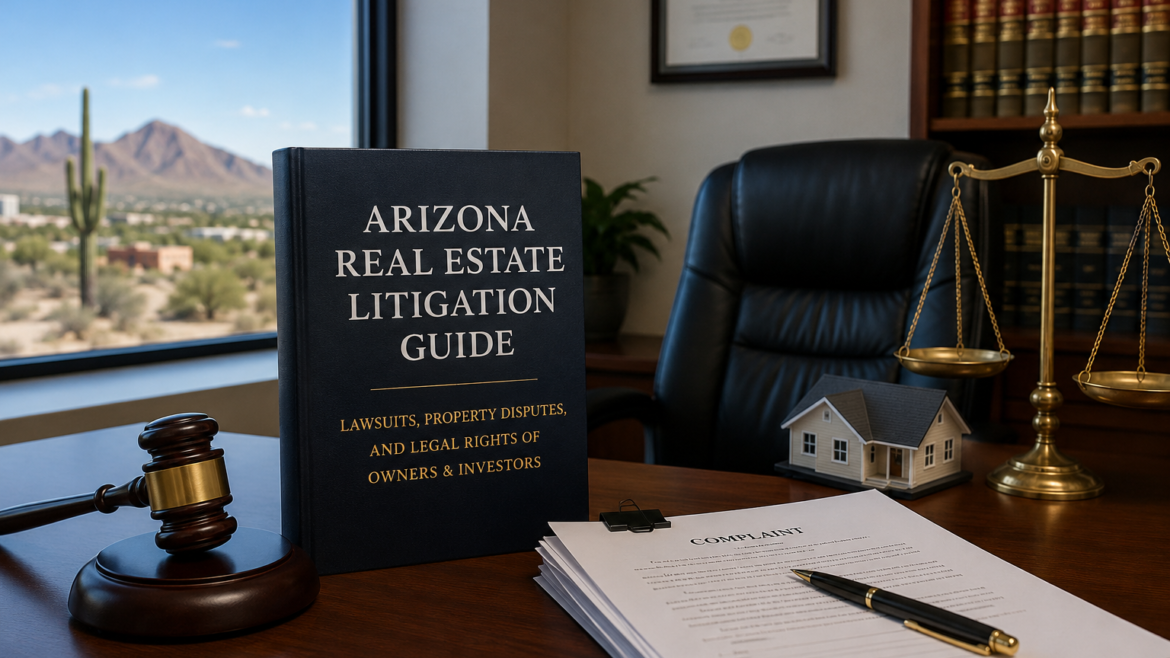
Arizona Real Estate Litigation Guide

Arizona Real Estate Litigation Guide: Lawsuits, Property Disputes, and Legal Rights of Owners & Investors

Arizona Real Estate Litigation Guide: Lawsuits, Property Disputes, and Legal Rights of Owners & Investors 1536 1024 Gottlieb Law

Gottlieb Law, PLC provides this article for information purposes only and nothing herein creates an attorney-client relationship. You should not take any actions in reliance on any of the information contained herein without consulting with qualified legal counsel first and reading this article is not a proper substitute for seeking legal advice of your specific situation.  Laws change over time and you should seek counsel to discuss any specific legal questions.

Real estate disputes in Arizona rarely start as lawsuits.

Typically, they begin with something smaller: a contract issue, a boundary question, a title concern, a tenant problem, or a disagreement between co-owners.

Once legal rights become disputed or parties fail to address issues early, these smaller issues can quickly develop into full-scale litigation.

Whether you are dealing with a title problem, a failed transaction, an HOA dispute, or a possession issue, understanding how real estate litigation works in Arizona can help you protect your property, your investment, and your leverage.

This guide outlines the most common real estate disputes, explains how litigation typically progresses in Arizona, and provides practical steps property owners and investors can take early to avoid unnecessary risk and expense.

What Is Real Estate Litigation in Arizona?

Real estate litigation involves legal conflicts over property rights, use, agreements, or possession that may ultimately require court involvement to resolve.

These disputes commonly involve:

  • Ownership or title to property
  • Rights to use or access land
  • Real estate purchase or sale agreements
  • Landlord–tenant or possession issues
  • HOA enforcement or restrictions
  • Construction or development conflicts

In Arizona, these cases are typically handled in Superior Court and can directly affect your ability to:

  • Keep or transfer ownership
  • Sell or refinance property
  • Access or use land
  • Recover or lose major financial value

Understanding how these disputes arise and are handled is the first step toward protecting your rights and making well-informed decisions when a real estate conflict develops.

Arizona Real Estate Litigation Checklist

When a real estate dispute arises, the outcome often depends on a handful of key legal factors. Knowing what Arizona courts focus on allows you to evaluate your position early and make informed, strategic decisions.

Courts will generally assess:

  • Whether valid legal rights or ownership exist
    • Who actually has enforceable rights to the property based on deeds, title records, or law
  • What contracts or documents control the situation
    • Purchase agreements, leases, HOA rules, easements, or other governing documents
  • Whether one party failed to meet its legal obligations
    • A breach of contract, violation of property rights, or failure to comply with legal duties
  • Whether immediate legal action is necessary
    • Situations involving possession, access, or risk of losing rights may require fast action
  • What legal remedy is appropriate
    • Financial damages, court orders, court-ordered sales, or other equitable relief depending on the case

Identifying how your situation aligns with these factors early on puts you in a stronger position to protect your rights, maintain leverage, and prevent a manageable issue from escalating.

Common Types of Real Estate Litigation in Arizona

1. Quiet Title Actions (Ownership Disputes)

Quiet title actions are used to resolve disputes involving ownership interests, title defects, or competing claims affecting real property.

These cases often arise when:

  • there are errors in the recorded deeds
  • multiple parties claim ownership
  • liens or recorded documents cloud title
  • inherited property creates conflicting interests

A successful quiet title action can clear title and allow a property to be sold, financed, or developed.

2. Partition Actions Between Co-Owners

When multiple people own a property and cannot agree, one party may file a partition action.

Common situations include:

  • inherited property disputes between siblings
  • business partners who want to exit ownership
  • unmarried co-owners after a breakup
  • investors disagreeing on strategy

In many cases, the court may order the property sold and the proceeds divided.

3. Boundary, Easement, and Encroachment Disputes

These disputes frequently involve:

  • fences or walls built in the wrong location
  • driveways or access roads
  • utility or drainage easements
  • neighboring structures crossing property lines

These cases are fact-driven and typically require detailed documentation, such as:

  • surveys
  • historical use
  • recorded plats
  • title documents

4. Adverse Possession and Prescriptive Rights

In some cases, long-term use or occupation of property can create legal rights, even without formal ownership.

These disputes typically involve:

  • long-term occupation of land
  • use of access routes or shared areas
  • long periods of unchallenged use or occupation 

These claims can significantly affect ownership and are frequently closely tied to quiet title litigation.

5. Breach of Real Estate Purchase Agreements

When a deal falls apart, litigation may follow.

Frequent issues include:

  • failure to close
  • disputes over earnest money
  • inspection or repair disagreements
  • financing contingencies
  • refusal to perform under contract

Depending on the facts, available remedies may include financial damages or, in some cases, specific performance requiring completion of the transaction. 

6. Seller Disclosure and Misrepresentation Claims

These cases arise when a buyer alleges that important property issues were not disclosed.

Examples include:

  • structural defects
  • water damage or mold
  • zoning or use restrictions
  • title or access issues

The outcome in these cases often depends on what the seller actually knew and whether that information was properly disclosed in writing.

7. Commercial Real Estate Disputes

Commercial litigation commonly involves higher stakes and more complex contracts.

Common disputes include:

  • lease defaults
  • CAM (common area maintenance) disagreements
  • guaranty enforcement
  • exclusive-use clause violations
  • purchase or development agreement disputes

Commercial leases are usually highly detailed, and the outcome of a dispute often turns on the exact language in the contract and supporting documentation.

8. Landlord–Tenant and Possession Disputes

These cases focus on property possession and move quickly.

They may involve:

  • eviction (forcible detainer) actions
  • holdover tenants
  • non-payment of rent
  • lease violations

Because these cases move quickly, any delay can significantly affect the rights and options of both landlords and tenants.

9. HOA and Condominium Disputes

Homeowners’ associations can create frequent litigation scenarios.

Typical issues include:

  • unpaid assessments
  • fines and enforcement actions
  • architectural or use restrictions
  • disputes over governing documents

In some cases, HOA liens can lead to foreclosure.

10. Construction Defect and Development Litigation

These cases regularly involve:

  • defective construction
  • contractor disputes
  • delays or abandonment
  • design or engineering issues

These disputes are often complex, involving multiple parties, expert reports, and extensive documentation to support each side’s position.

11. Wrongful Liens and False Recordings

In some disputes, parties improperly record documents against a property that may affect title or ownership rights.

This may include:

  • invalid liens
  • forged documents
  • improper title filings

Arizona law provides remedies to remove these documents and potentially recover damages.

Warning Signs a Real Estate Dispute Is Escalating Toward a Lawsuit

Most real estate disputes in Arizona do not begin with a lawsuit. Instead, they often follow a recognizable sequence, and recognizing the early warning signs can help you protect your position early.

In many cases, the path looks like this:

  • A disagreement arises over ownership, contracts, or property use
  • Key documents and legal rights are reviewed
  • A formal demand or legal notice is sent
  • Negotiation or mediation is attempted
  • A lawsuit is filed if the issue is not resolved

Some disputes can be resolved through clear communication, but others escalate quickly when legal rights, property access, or important deadlines are involved. In these situations, waiting too long to act can weaken your position and reduce your available options.

Common Warning Signs to Watch For

Certain developments often indicate that a dispute is becoming more serious and may lead to litigation:

  • A lien or legal notice is recorded against your property
  • A lis pendens is filed, signaling an active or pending lawsuit
  • A co-owner refuses to cooperate or communicate
  • Access to your property is blocked or restricted
  • A buyer or seller refuses to close on a transaction
  • You receive HOA enforcement notices, fines, or legal threats
  • A tenant refuses to vacate or comply with lease terms

If you encounter any of these warning signs, it usually means the dispute is moving past informal resolution. Early legal review helps you understand your rights, maintain leverage, and take action before the situation becomes more difficult or costly.

What to Expect in an Arizona Real Estate Lawsuit

While real estate litigation can seem complex, most cases in Arizona follow a structured process. Understanding each phase allows you to anticipate next steps, reduce uncertainty, and make informed decisions as your case moves forward.

While every dispute is unique, most real estate lawsuits move through the following stages:

1. Filing and Response

The process begins when a complaint is filed with the court, outlining the legal claims.

  • The defendant is formally served with the lawsuit
  • A response or motion is filed to admit, deny, or challenge the claims

This initial stage establishes the foundation for the case and often determines the legal strategy for the remainder of the dispute.

2. Early Case Strategy and Motions

At the outset, both sides may take steps to strengthen their position or narrow the issues.

  • Motions to dismiss or limit claims
  • Requests for early rulings by the court
  • Possible injunctions or emergency relief in urgent situations

Early legal action at this stage can improve your leverage or even resolve critical issues before the case advances.

3. Discovery Phase

Discovery is often the most detailed and time-intensive part of the case, where both sides gather evidence.

  • Exchange of documents and records
  • Written questions (interrogatories)
  • Depositions (sworn testimony)
  • Expert analysis, such as appraisals or property evaluations

The quality and organization of evidence gathered during discovery can play a major role in the strength of your case and the likelihood of a favorable outcome. 

4. Settlement or Mediation

Many real estate disputes are resolved before trial.

  • Negotiation between parties
  • Formal mediation with a neutral third party

Settlement can help control costs, shorten the dispute timeline, and give both parties more certainty over the outcome than proceeding to trial.

5. Trial

If the case does not settle, it proceeds to trial.

  • A judge or jury reviews the evidence
  • Legal arguments are presented by both sides
  • A final decision is issued

Trials are often complex and time-intensive, but they provide a final resolution when the parties cannot reach agreement through other means.

6. Post-Trial and Enforcement

After a decision is made, additional steps may follow.

  • Enforcement of the judgment
  • Collection efforts or property-related orders
  • Appeals, if one party challenges the outcome

Understanding the full litigation process allows you to prepare effectively, set realistic expectations, and work with your attorney to develop a strategy that aligns with your goals and the facts of your case.

Key Evidence and Deadlines in Arizona Real Estate Litigation

In real estate litigation, outcomes depend on evidence and timing, not just legal arguments. Knowing which documents matter and how deadlines affect your case is critical to protecting your position and improving your chances of a favorable outcome.

The Role of Evidence

Strong cases rely on clear, organized documentation that supports your legal position. Arizona courts place significant weight on written records and objective evidence when deciding property disputes.

Key evidence often includes:

  • Deeds and title records
    • Establish ownership and legal interests in the property.
  • Purchase contracts and disclosures
    • Outline the legal responsibilities and entitlements of each party.
  • Surveys and legal descriptions
    • Clarify boundaries, access rights, and encroachments
  • HOA documents and governing rules
    • Control restrictions, obligations, and enforcement authority
  • Leases and payment records
    • Critical in landlord–tenant and possession disputes
  • Communications such as emails and text messages
    • Provide context, intent, and evidence of agreements or disputes
  • Photos, inspection reports, and property records
    • Support claims involving condition, use, or damage

Organizing and preserving key evidence early strengthens your position, improves your negotiating leverage, and helps you avoid unexpected problems as the case progresses.

Why Deadlines and Timing Are Critical

Timing is as important as evidence in Arizona real estate disputes. State law sets strict deadlines for various claims, and missing these deadlines can have serious consequences.

Delays can:

  • Significantly limit or potentially eliminate legal rights 
  • Weaken your negotiating position
  • Increase financial exposure or damages

Certain types of cases are especially time-sensitive:

  • Construction-related disputes often involve strict pre-lawsuit requirements and statutory deadlines.
  • Possession and eviction matters can move very quickly, requiring immediate action.
  • Title and ownership disputes may become more complex over time. Taking prompt action allows you to preserve evidence, meet important deadlines, and maintain control over the direction of the dispute.

Litigation vs. Settlement in Arizona Real Estate Disputes: Choosing the Right Strategy

Not every Arizona real estate dispute needs to go to court. In many cases, the best outcome comes from selecting the right strategy early, based on the facts, risks, and your long-term objectives.

In practice:

  • Negotiation can resolve disputes quickly and cost-effectively.
  • Mediation can help preserve relationships and reduce legal expenses.
  • Litigation becomes necessary when the other party refuses to cooperate or when legal rights must be formally enforced.

The right approach depends on multiple key elements:

  • The strength of your legal position and supporting evidence
  • The financial value and complexity of the dispute
  • The urgency of the situation, especially if property rights or access are at risk
  • Your long-term business, investment, or ownership goals

Taking a strategic approach early helps you maintain leverage, control costs, and position yourself for the most favorable outcome.

Arizona Real Estate Disputes: Protect Your Rights

The following are general considerations and not a substitute for legal advice.

If you are facing a real estate dispute, the actions you take at the outset can significantly affect the result. Preparing key information and avoiding common mistakes will strengthen your position before any legal action is filed.

Gather Key Documents and Evidence

Start by organizing all pertinent materials related to the property and dispute:

  • Deeds and closing documents
  • Contracts and agreements
  • Title reports or title insurance policies
  • HOA documents or lease agreements
  • Emails, text messages, and other communications
  • Photos, timelines, and notes documenting the issue

Having these documents organized allows your attorney to quickly assess your case and recommend the most effective next steps.

Avoid Costly Mistakes That Can Weaken Your Case

Certain actions can unintentionally damage your legal position. Avoid the following missteps:

  • Recording documents or taking legal action without guidance
  • Making written statements that could be interpreted as admissions
  • Relying on verbal agreements that are not documented

Protecting Your Position Early Matters

Real estate disputes in Arizona can escalate rapidly and carry serious consequences. Disputes involving ownership, contracts, access, or co-ownership often become more complicated and costly the longer they remain unresolved.

Taking early, informed action can help you:

  • Protect your legal rights
  • Preserve negotiating leverage
  • Prevent a manageable issue from becoming a costly legal dispute

Gottlieb Law works with property owners, investors, landlords, and businesses to deal with complex real estate disputes and develop practical legal strategies. 

Call our firm today at 602-899-8188 to schedule a consultation or visit our contact us page.

FAQ: Arizona Real Estate Litigation

What is real estate litigation in Arizona?

Real estate litigation in Arizona involves legal disputes over property ownership, use, contracts, or possession, resolved through the court system. These cases often arise when parties cannot agree on rights or obligations tied to real property, and may ultimately require a judge or jury to determine the outcome. 

What are the most common real estate lawsuits in Arizona?

The most common real estate lawsuits in Arizona include quiet title actions, breach-of-contract disputes, partition actions between co-owners, HOA enforcement cases, and landlord–tenant matters. Each type of case focuses on different legal rights, but all can directly impact ownership, financial interests, or control of the property.

Can a co-owner force the sale of a property in Arizona?

Yes. In Arizona, a co-owner can file a partition action to request a court-ordered sale when owners cannot agree on what to do with a property. If dividing the property is impractical, the court may order it sold and the proceeds distributed among the owners.

What is a quiet title action, and when is it used?

A quiet title action is a lawsuit used to resolve disputes over property ownership and remove competing claims from the title. It is commonly used when there are conflicting deeds, unresolved liens, inheritance issues, or other title defects that prevent a clear transfer or sale of the property.

How long does a real estate lawsuit take in Arizona?

The timeline for a real estate lawsuit in Arizona varies depending on the case’s complexity. Some disputes are resolved in a few months through negotiation or settlement, while more complex cases involving multiple parties, expert testimony, or contested facts can take a year or longer to reach resolution.

Do most real estate disputes go to trial?

No. Many real estate disputes in Arizona are resolved before trial through negotiation or mediation. A trial typically becomes necessary only when the parties cannot reach an agreement or when legal rights must be formally decided by the court.

What should I do if someone files a lien or lawsuit against my property?

If a lien, lis pendens, or lawsuit is filed against your property, it is important to act quickly. These filings can affect your ability to sell, refinance, or use the property. Early legal review can help you understand your options and take steps to protect your rights.

When should I contact a real estate litigation attorney?

You should contact an attorney as soon as a dispute begins to impact your legal rights or property interests. This includes situations where ownership is unclear, a deal is falling apart, access is being restricted, or legal notices have been recorded. Acting early often improves your position and available options.

What are the risks of waiting too long to take legal action?

Waiting too long can weaken your case or eliminate your legal rights entirely. Evidence may become harder to obtain, deadlines may expire, and the other party may gain leverage. Early action allows you to preserve documentation, meet legal deadlines, and maintain control over the situation.

What outcome can I expect from a real estate litigation case?

Outcomes vary depending on the type of dispute, but may include financial damages, contract enforcement, a court-ordered sale of property, or a ruling clarifying ownership or use rights. The result depends heavily on the facts, documentation, and legal strategy involved.


Gottlieb Law, PLC provides this article for informational purposes only. Reading it does not create an attorney-client relationship, and you should not act or rely on any of the information herein without first consulting qualified legal counsel. Laws and local procedures change frequently. Always seek legal advice specific to your situation.